
By March 15, 2026, San Diego’s advance reservation fee program at Balboa Park and Mission Bay had generated nearly $165,000, while city staff and golfers reported fewer complaints about brokers and disappearing tee times. (Source: Times of San Diego, municipal tee-time reservation fee coverage)
That may sound like a tee-sheet story. It is bigger than that. It is a public golf governance story.
When a city changes how access is managed, who gets priority, how fairness is protected, and how demand pressure turns into cleaner revenue, it is doing more than adjusting a reservation rule. It is making a statement about what kind of public golf system it wants to run. That is why municipal golf belongs inside Golf’s Reinvestment Era.
Because public golf reinvestment is not only about fixing bunkers, replacing irrigation, improving restrooms, buying carts, or renovating clubhouses. Those projects matter.
But municipal golf also has to answer a different question:
What does the community get back?
That question is what separates a maintenance conversation from a public-value conversation.
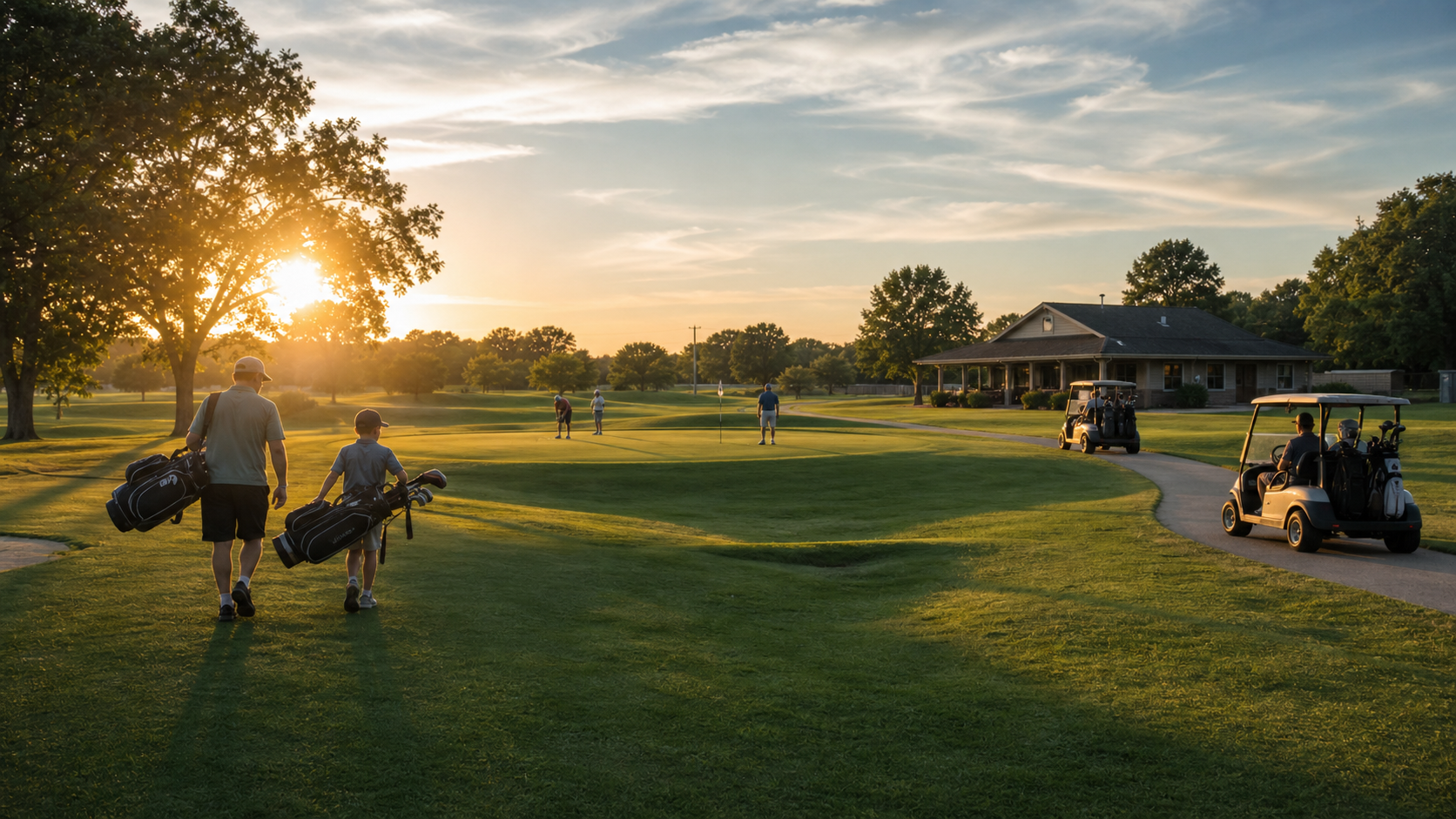
A municipal course is not just another golf facility. It is often one of the most accessible doors into the game. It is where a junior can get started, where a parent can bring a child without the game feeling out of reach, where someone can play nine after work, where leagues gather, and where golf remains connected to the local community. That is why the public story matters.
If cities are going to reinvest in golf, the case cannot stop at “the course needs work.”
It must explain what the reinvestment protects, who it serves, how access stays intact, and why the facility matters beyond the next capital line item.
The Old Municipal Golf Question Is Too Small
For years, municipal golf conversations have often started with a narrow question: How much will it cost to keep this course going?
That question is understandable. Public budgets are real. Maintenance costs are real. Irrigation, equipment, staffing, carts, clubhouse repairs, and course conditions all eventually show up somewhere. But if that is the only question, the conversation starts too small.
The better question is not just what the course costs. The better question is what role the facility is supposed to play. Is it a recreation asset? A beginner pathway? A senior activity hub? A junior golf entry point? A public health and outdoor access resource? A tourism or economic-development piece? A neighborhood gathering place? A self-funded enterprise that needs clearer reinvestment logic?
The answer may be different from city to city. But the discipline is the same. Before a city defines the project, it has to define the outcome. That is where municipal golf decisions often get harder, but also more useful.
A restroom upgrade, irrigation project, cart fleet purchase, clubhouse renovation, tee-sheet policy, or management agreement can all be reasonable moves. But each one should connect back to the public purpose the facility is expected to serve. Without that connection, reinvestment gets easy to criticize. With that connection, the conversation changes.
The course is no longer just asking for money. It shows what the community is buying.
Funding Logic Has to Be Visible
Municipal golf leaders are not only making facility decisions. They are making public decisions. That means the funding story matters.
A private club can explain a project to members. A private owner can make a capital decision based on the business case. A city has to explain why public golf deserves reinvestment, how that reinvestment will be funded, and what the public should expect in return. That is where vague language creates problems.
“Course improvements” may be accurate, but it is not always persuasive.
“Better conditions” may be true, but it does not always explain the operating logic.
“Modernization” may sound positive, but it can also raise concerns about affordability, access, and whether public golf is drifting away from the people it is supposed to serve.
The stronger municipal story connects the dollars to visible outcomes. That is why current public examples matter. Cincinnati Recreation Commission recently launched a self-funded, multi-year improvement plan across six golf facilities, with 2026 work tied to carts, equipment, restroom upgrades, irrigation, operating efficiencies, and guest experience. Its irrigation work at two courses is projected to reduce water use by 20%. (Source: Cincinnati Recreation Commission Better Golf in Progress announcement)
That kind of framing is important. It does not just say, “We are spending money.”
It says, “Here is what the reinvestment is intended to improve.” That is a better public story.
The same logic shows up in other municipal structures too: dedicated capital contributions, fee surcharges, revenue-sharing agreements, bond-funded infrastructure, or contractor-funded improvements. None of those tools is automatically right or wrong. The point is that the funding logic must be understandable.
Public golf gets harder to defend when the public cannot see the connection between rates, reinvestment, reliability, access, and outcomes. It gets easier to defend when the story is clear.
Here is who benefits.
Here is how we will know whether it worked.
Access Has to Be Managed, Not Assumed
One of the easiest mistakes in municipal golf is assuming that public automatically means accessible. It does not.
A course can be publicly owned and still be difficult to access. Tee times can disappear before regular golfers ever see them. Demand can be captured by brokers, bots, or highly organized users. Pricing can drift in ways that make casual play harder. Policies can favor speed, revenue, or convenience without fully considering fairness. A facility can technically remain open to the public while becoming harder for the public to actually use. That is why access must be managed.
The San Diego example matters here because the issue was not just revenue. It was fairness, trust, and whether local golfers believed the tee sheet was being handled in a way that served the public interest. The reservation fee program generated nearly $165,000 by mid-March, but the more important signal may have been fewer complaints about brokers and disappearing tee times. (Source: Times of San Diego, municipal tee-time reservation fee coverage) That is municipal golf in the reinvestment era.
The work is not only irrigation, carts, restrooms, ranges, clubhouses, or course conditions. It is also policy, access design, reservation rules, resident priority, communication, and trust. Those choices shape whether public golf feels public.
A city can invest millions into a facility and still miss the point if the golfer experience feels unfair, confusing, or out of reach. That does not mean every tee time should be cheap, every rate should be frozen, or every policy should satisfy every user. Municipal golf still has to operate responsibly. It needs revenue. It needs structure. It needs rules that protect the asset. But if access is part of the public value, then access has to be designed on purpose.
Not assumed.
Not hoped for.
Managed.
Modernization Should Not Make Public Golf Less Public
Municipal golf does need to modernize.
Many public courses are carrying aging irrigation systems, older buildings, dated restrooms, worn cart paths, equipment needs, tired practice areas, and operating models that were built for a different era. Ignoring those needs does not protect affordability. It usually just makes the eventual fix harder, more expensive, and more disruptive. That is especially true with irrigation.
USGA’s Water Conservation Playbook notes that a new golf course irrigation system can cost $3 million to sometimes more than $5 million, depending on geography and system complexity. The same guidance also points out that older systems are often used far longer than superintendents would prefer because replacement cost is so significant. (Source: USGA, Water Conservation Playbook: Irrigation System Maintenance) That is the part the average golfer may never see.
They may see a dry spot, a wet spot, a closed hole, a condition issue, or a rate increase. What they may not see is the buried infrastructure, staff time, water waste, energy use, emergency repairs, and capital timing behind it. And that is where the cost of doing nothing starts to show up.
A leaking or unreliable irrigation system does not just create a maintenance headache. It can drive higher water bills, waste labor hours, increase electrical costs, create inconsistent playing conditions, and eventually force parts of the course out of normal use. In Wichita’s 2026 irrigation agenda, aging systems were tied directly to water use, electrical consumption, maintenance costs, and customer experience — exactly the kind of connection municipal golf leaders need to make visible when explaining infrastructure reinvestment. (Source: City of Wichita, Golf Course Irrigation Improvements agenda report, 2026) That is why municipal modernization has to be explained clearly.
If a city only says “we need irrigation work,” the public may hear another maintenance expense. If the city explains reliability, water efficiency, labor savings, course consistency, fewer disruptions, and long-term access, the conversation changes.
But modernization still has to be handled carefully. If public golf reinvestment only creates a better product for a narrower audience, it misses the larger opportunity. The goal should not be to make municipal golf feel like private golf. The goal should be to make public golf more reliable, more welcoming, more useful, and more sustainable for the people it is meant to serve. That distinction matters.
A new irrigation system can support better conditions, but it can also reduce water waste and improve operating reliability. Better carts and equipment can improve the golfer experience, but they can also support maintenance efficiency and facility consistency. A better practice area can create revenue, but it can also help beginners get comfortable before they ever step onto the first tee. A better reservation system can protect yield, but it can also make access feel fairer. That is the kind of modernization municipal golf needs.
Not modernization that simply raises the ceiling for a few. Modernization that strengthens the floor for many.
This is why the public story matters so much. Cities and operators have to be able to explain how reinvestment protects access, improves reliability, supports the operating model, and gives the community something durable in return.
Modernization should not make public golf less public. It should make public golf more capable of lasting.
What Comes Next
Municipal golf does not need vague reinvestment language. It needs a better public story.
That story should not be built around guilt, nostalgia, or generic claims that the course needs help. It should be built around the outcomes people can understand: access, fairness, reliability, water use, course conditions, beginner pathways, senior recreation, family time, community value, and financial responsibility. That is the conversation municipal golf has to earn. Because when the story is weak, reinvestment looks like spending. When the story is clear, reinvestment looks like stewardship.
The best municipal golf leaders will not simply ask, “What do we need to fix?”
They will ask:
What public value are we protecting?
Who needs this facility to remain accessible?
How should the operation be structured?
How will this be funded?
What will golfers and the community actually experience differently?
And how do we make sure modernization strengthens public golf instead of narrowing it? That is where Tech2Turf wants to be useful. We help golf facilities, municipal leaders, operators, and ownership groups think through those questions before the story gets reduced to a budget request or a construction scope. Our work is about helping connect facility needs, operating realities, public value, and reinvestment logic in a way leaders can actually explain and act on.
That is where municipal golf belongs in Golf’s Reinvestment Era. Not as a side issue. Not as a charity case. Not as an aging public asset to defend every budget cycle. But as a serious public recreation system that deserves clear thinking, disciplined reinvestment, and a stronger connection between capital and community outcomes. For any city, board, or operating team thinking through what public golf should become next, this is the kind of conversation worth having early.
In the next article, we will go deeper into one of the least visible but most important pieces of that conversation: irrigation.
Because once a city, board, or owner starts asking what makes a golf facility more reliable, more sustainable, and more capable of lasting, water and infrastructure move quickly from the back of the maintenance shop to the front of the capital plan.